Meta Ad Sizes Guide: Dimensions, Formats & Best Practices That Convert
Meta ads remain the most powerful tool for digital growth in the USA, UK, and global markets. Every year, more businesses increase their spending on Facebook and Instagram to reach highly targeted audiences. However, success on these platforms depends on more than just a good offer. It requires technical precision. Meta ad sizes refer to the specific dimensions and aspect ratios required for different ad placements. Using the correct meta ad sizes ensures your creative looks professional, loads correctly, and captures attention. If your ad is cropped or blurry, users will scroll past it. This guide provides the exact specifications you need to optimize your campaigns and improve your return on investment.
What You'll Learn
What are Meta Ad Sizes?
In simple terms, meta ad sizes are the digital blueprints for your advertising creatives. They define the width and height of an image or video in pixels. Because Meta operates multiple platforms, including the Facebook Feed, Instagram Stories, and Messenger, there is no single size that fits every placement.
When we talk about meta ad sizes, we are usually discussing two main factors:
- Dimensions: The actual pixel count, such as 1080 x 1080 pixels.
- Aspect Ratio: The proportional relationship between width and height, such as 1:1 (square) or 9:16 (vertical).
Using the wrong size can break your ad performance. If you upload a horizontal image for a vertical Story placement, Meta may stretch the image or add awkward black bars. This makes your brand look unprofessional and reduces the effectiveness of your message.
Why Meta Ad Sizes Matter for Ad Performance
Ad size directly impacts how many people see and interact with your content. When a creative perfectly fits a user’s screen, it creates an immersive experience. This lead to higher engagement and lower costs.
Better Visibility on Feeds
Correct dimensions ensure your ad occupies the maximum available screen real estate. This makes it harder for users to ignore your brand while scrolling.
Higher Engagement Rate
Images and videos that are sized correctly maintain their high quality. Clear, crisp visuals are more likely to earn likes, comments, and shares.
Platform Approval and Policy Safety
Meta has strict guidelines. Ads that do not meet size requirements might be rejected or limited in reach by the algorithm.
Better User Experience
Mobile users expect content to feel native to the app. Sizing your ads for mobile-first viewing creates a seamless journey for the customer.
Lower Wasted Ad Spend
When ads are visually broken, your click-through rate drops. This causes your cost per click to rise, meaning you pay more for fewer results.
Most Common Meta Ad Formats You Should Know
Meta offers several ways to present your message. Each format serves a different stage of the customer journey.
Single Image Ads
This is the most basic format. It uses one high-quality image to promote a product or service. It is excellent for quick updates or brand awareness.
Video Ads
Video ads allow you to tell a deeper story. They appear in the feed, stories, and reels. They are highly effective for demonstrating product features.
Carousel Ads
A carousel allows you to showcase up to ten images or videos within a single ad. Each item can have its own link. This is perfect for e-commerce stores.
Story Ads
These are full-screen vertical ads that appear between user stories. They are highly immersive and drive high engagement among younger demographics.
Reels Ads
Reels are the fastest-growing placement on Meta. These short, vertical videos allow you to reach people who are discovering new content.
Recommended Meta Ad Sizes for Facebook and Instagram
To simplify your design process, follow these standard dimensions used by professional marketers. These sizes are the safest options to ensure compatibility across devices.
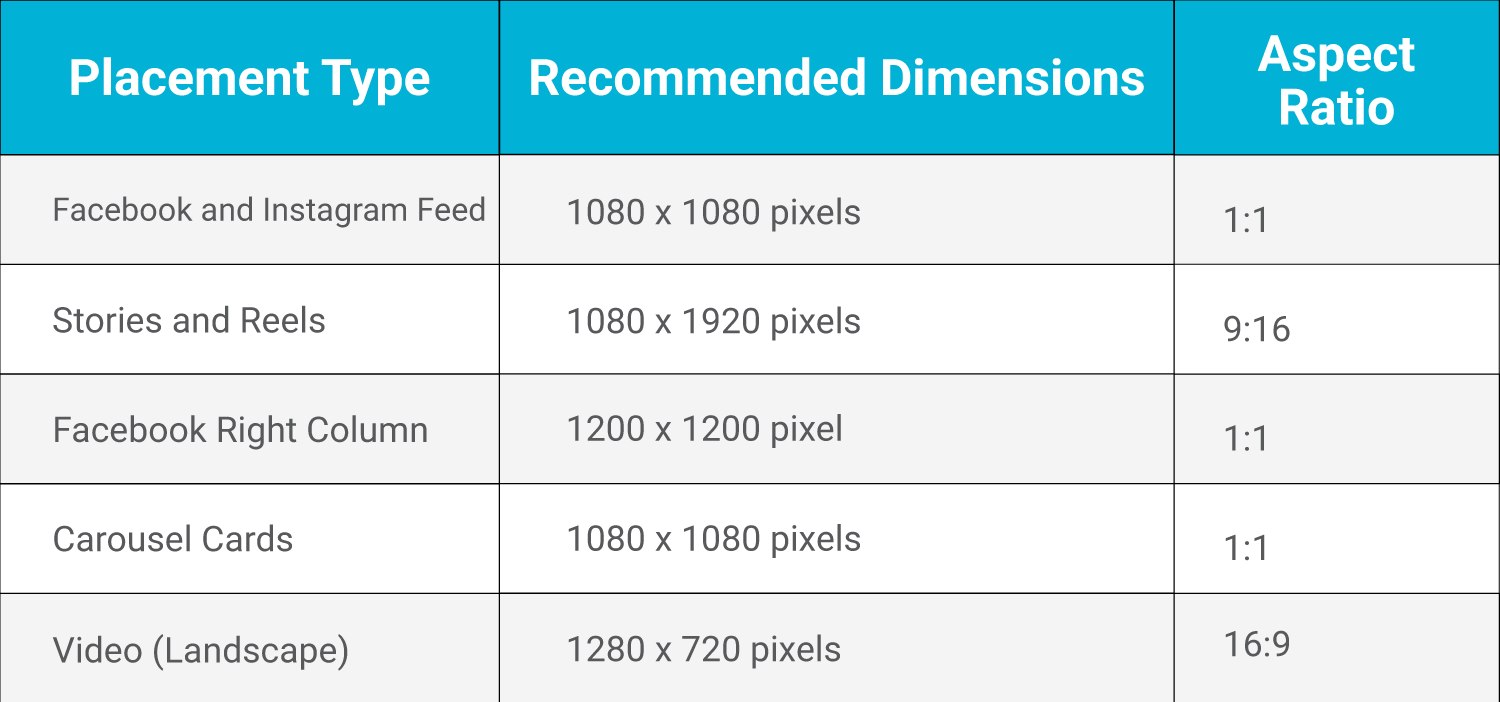
For the main feed, a square (1:1) or slightly vertical (4:5) ratio is best. Square images are versatile and work well on both Facebook and Instagram.
Story and Reels Ads Size
These must be vertical. Use a 9:16 ratio to fill the entire mobile screen. This format is essential for capturing the attention of mobile-first users.
Carousel Ads Size
Consistency is key here. Every card in your carousel should be a 1080 x 1080 square. This ensures a smooth transition as the user swipes through your products.
Video Ads Size
While landscape video is okay for desktop, vertical video (4:5 or 9:16) performs significantly better on mobile devices where most users spend their time.
Best Practices for Choosing the Right Meta Ad Size
Choosing the right size is a strategic decision. It depends on your campaign goals and where your audience spends their time.
Match Size With Placement
Do not use a “one size fits all” approach. Create specific assets for the feed and different assets for stories. This ensures your ad looks native to the environment.
Design Mobile First
The majority of Meta users are on mobile. Always prioritize vertical or square formats that look great on a smartphone screen.
Avoid Too Much Text
Meta used to have a 20 percent text rule. While this is no longer a strict rejection criteria, ads with minimal text on the image still perform better and look cleaner.
Test Multiple Sizes
Run A/B tests to see which dimensions your audience prefers. You might find that your audience engages more with 4:5 images than 1:1 squares.
Follow Meta Guidelines
The platform frequently updates its specs. Always check the official Meta Business Help Center or work with a meta ads agency to stay current.
Common Mistakes Businesses Make With Meta Ad Sizes
Many businesses fail to see results because of simple technical errors. One major mistake is using a landscape image for a Story placement. This results in empty space and tiny text that no one can read. Another common error is uploading low-resolution files. If your image is less than 1080 pixels wide, it will look pixelated on high-resolution screens. Many brands also ignore the “safe zones” in Stories and Reels. If you place your text too high or too low, it will be covered by the app’s UI elements like the profile icon or the “swipe up” button.
When You Should Hire an Agency for Meta Ads
Managing meta ad sizes is only the surface of a successful campaign. Running profitable ads requires deep strategy, constant testing, and creative optimization. Many business owners find themselves overwhelmed by the technical requirements of the Ads Manager.
A professional meta ad agency brings expertise that saves you time. They understand how to read the data and adjust creatives in real-time. If you are spending significant money on ads but not seeing a return, it is time to bring in experts. Agencies help reduce ad waste by ensuring every dollar is spent on optimized, high-performing placements.
How to Choose the Right Meta Ads Agency
Not all agencies are equal. When looking for a facebook ad agency, you should look for a partner with a proven track record. Ask for case studies that show clear ROI for businesses in your industry. A good agency should have a deep understanding of the Meta algorithm and the latest creative trends.
Transparency is also vital. You want an agency that provides clear reports and explains the “why” behind their decisions. Dot Riser fits these criteria by focusing on data-driven results and customized strategies. We do not use cookie-cutter templates. Instead, we look at your specific business goals to build a custom roadmap for growth.
How Dot Riser Helps Businesses Run Better Meta Ads
Dot Riser is a specialized agency that helps businesses in the USA and beyond scale their digital presence. We handle every detail of your Meta campaigns. This includes selecting the perfect meta ad sizes, designing high-converting creatives, and managing your daily budget.
We specialize in taking the technical burden off your shoulders. Our team monitors your ads daily to ensure they are performing at peak efficiency. Whether you need to increase leads or boost e-commerce sales, we provide the strategic oversight needed to win in a competitive market.
How to Get Started With Dot Riser
Ready to take your advertising to the next level? Getting started with Dot Riser is simple.
- Consultation: Visit our service page and book a call to discuss your business goals.
- Strategy Audit: We will analyze your current ads and identify areas for improvement.
- Execution: Our team handles the setup, creative design, and technical optimization.
- Scale: We use data to find winning ads and increase your spend to maximize profit.
Contact Dot Riser today to see how a professional meta ad agency can transform your business growth.